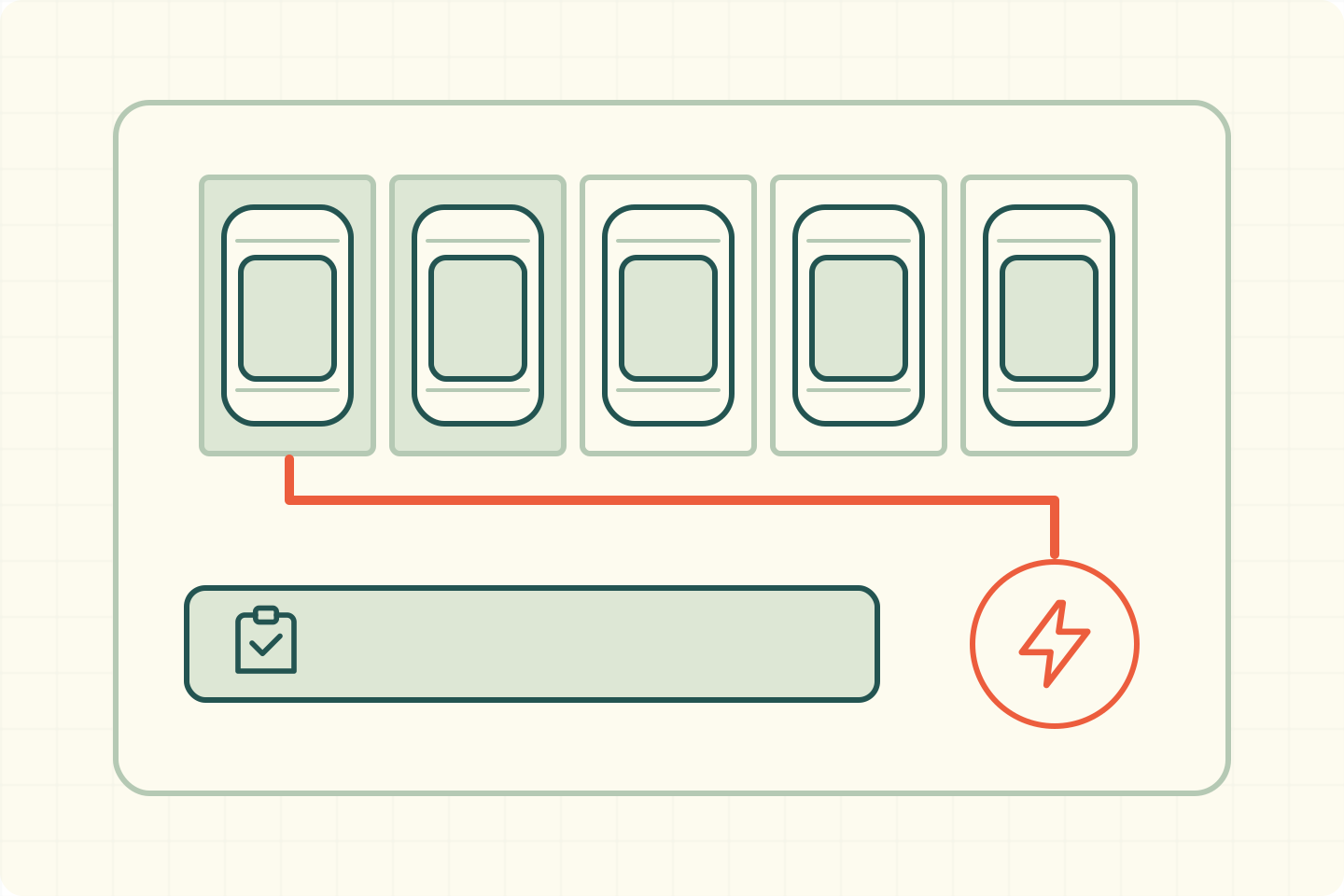
Start with the vehicles, daily energy needs, charging windows and available parking. Then review the electrical supply, distribution, cable pathways, access and future bays. Bringing these decisions into one brief helps owners and delivery partners compare equipment and installation proposals on the same basis.
WHY IT MATTERS
Get the scope right. Then move forward.
A useful charging plan connects how vehicles use the location, what the electrical infrastructure can support and how the property may change. When these decisions are made separately, a project can face avoidable changes to its layout, enabling works or equipment choice. Start with a shared brief so the owner, facility team and delivery partners can work from the same assumptions.
THE CONVERSATION IN DETAIL
What to consider.
Exact deliverables, equipment coverage and responsibilities are agreed for each project.
01
Understand the demand before the hardware
Document the vehicles expected to use the site, when they arrive, how long they remain parked and when they next need to be ready. Separate initial demand from possible expansion. This creates a practical basis for discussing charger quantities and charging arrangements rather than selecting equipment simply because its advertised power appears attractive.
02
Map the path from supply to parking
Collect connection details and available electrical drawings, then identify the proposed supply point and charging positions. Existing building demand, distribution capacity and cable distances all deserve attention. The planning discussion should make clear which assumptions are supported by records and which require a site visit, utility input or professional technical verification.
03
Make the space work for people
Charger placement affects drivers, pedestrians, facility staff and maintenance access. Consider cable reach, circulation, visibility, weather exposure and the practical use of neighbouring bays. Parking layouts and accessibility requirements should be reviewed together with the electrical route so the proposed arrangement makes sense as a working part of the property.
04
Create a realistic route to expansion
Discuss what is needed for the first phase and what would have to change as demand grows. Future bays, pathways and distribution changes can be considered without assuming that all future power is already available. Record expansion assumptions so later decisions can be made against actual vehicle demand, verified capacity and investment priorities.
A USEFUL FIRST BRIEF
What should you share?
You do not need every answer to start. Send what is available and we can identify the information still needed.
The cost includes more than the charger. Equipment type and quantity, supply upgrades, cable distance, distribution and protection, mounting or foundations, site preparation and service arrangements affect the scope. Ask for a quotation identifying inclusions, exclusions and work expected from other parties. A location, parking plan and intended use provide the starting point for a meaningful discussion.
What electrical infrastructure should be checked?
Qualified professionals should assess supply, existing demand, distribution, protection, earthing and cable routes against the equipment and applicable requirements. Existing drawings and connection details are useful inputs. A site assessment brings equipment specifications together with the property’s electrical and operating requirements. Avoid opening equipment or carrying out electrical checks yourself to prepare an enquiry.
Can we start small and expand later?
A staged approach can be discussed where it fits the site and likely demand. Consider initial bays alongside future cable pathways, parking positions and potential electrical expansion. This means recording assumptions so later additions can be assessed sensibly, rather than buying every possible future component immediately. Actual capacity, upgrades and costs need verification for each phase.
How does maintenance support work?
Begin with the manufacturer, model, location, symptoms, warranty status and existing service arrangement. Establish whether the issue concerns equipment, electrical infrastructure or a platform or vehicle dependency. The appropriate scope, access needs, parts dependencies and attendance arrangements can then be confirmed. Response times and coverage are agreed for the particular requirement.
KEEP EXPLORING
Related capabilities.
A project may need more than one part of the infrastructure conversation.
Know what you are planning. Know what to ask next.
For owners and project teams considering their first charging facility, comparing approaches for an existing site or planning additional bays before buying equipment.
What a useful brief addresses
The intended user groups and charging windows to be considered.
Available site drawings, photographs and electricity-connection information.
Known constraints and information still requiring verification.
Scope, operating model and expansion assumptions to take into the next discussion.
What this helps you decide
A requirement framed around vehicle use, parking duration and expected demand.
Important supply, distribution and layout questions identified for technical assessment.
A more consistent brief for equipment and installation discussions.
An initial phase considered together with practical expansion scenarios.
Planning starts with the information available and identifies what still needs to be checked. Electrical designs, utility decisions, permissions and commercial viability require the appropriate project-specific assessment and responsible parties.
A CLOSER LOOK AT THE INFRASTRUCTURE
Real equipment. Practical details.
Explore photographs of equipment and site activity, then discuss how your own location and requirements compare.
We use essential cookies to keep the website working. Choose “Allow all” to also enable optional analytics cookies, or “Essential only” to continue without them. You can change your choice anytime using “Analytics preferences” in the footer.