
PROPERTY PLANNING
How to plan EV charging for a commercial property in India
Published · Updated 27 October 2026 · Vasudha editorial
Start with parking behaviour and electrical readiness, then select the charger. A useful commercial-property plan explains who will charge, when they will charge and who will be responsible for the facility.

Define the everyday use
An office may have vehicles parked through a working day, while a shopping centre has changing visitor demand. Record the approximate number of EVs, arrival and departure windows, access rules and expected growth. Distinguish an employee amenity from a public charging business: their operating responsibilities and commercial assumptions may differ.
Build a site information pack
Collect a parking layout, photographs, existing electrical drawings and connection details. Mark possible charger locations and the distance to the supply point. Include any tenant or property permissions that need discussion. This pack helps an installation partner identify what needs a site visit and what needs review by the responsible electrical professionals.
Separate equipment from enabling works
Request a scope that identifies the charger, distribution equipment, cabling, civil preparation, testing and commissioning responsibilities separately. Ask who handles each dependency and what is excluded. This makes proposals easier to compare and reduces surprises when a charger arrives before its location is ready.
Plan daily ownership and expansion
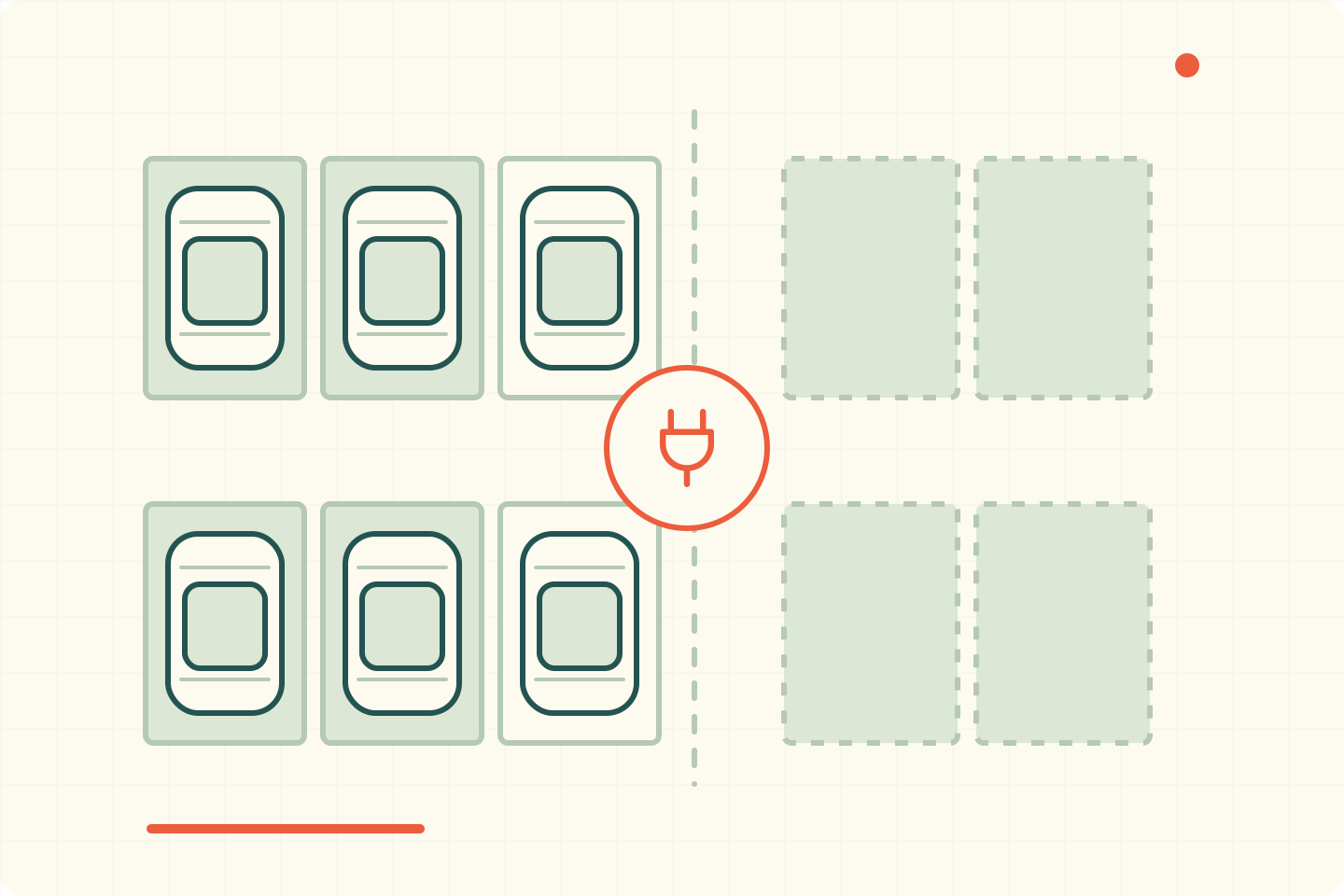
Decide who manages access, responds to a fault and arranges maintenance. If payment or network software is required, establish the supplier and integration scope. For example, a property starting with a few employee bays can discuss future cable pathways without assuming the existing connection will support every future charger.
Check the applicable requirements
India's Ministry of Power published EV charging infrastructure guidelines in September 2024. Use the official material as a starting point and verify subsequent notifications, local utility conditions and site-specific approvals before committing to a design. This guide is planning information, not an approval or an electrical design.
Bring the right people into the discussion
The property owner, facilities team, parking operator and intended users can see different constraints. A tenant may want convenient staff charging while the parking team is concerned about bay turnover. Invite these perspectives early and agree who can make decisions. A written brief should record intended users, the access model and issues requiring technical assessment. This helps the installation conversation progress without repeatedly revisiting basic assumptions.
Compare proposals against the same brief
Give delivery partners the same layout, equipment assumptions and scope expectations. Ask them to separate equipment supply, enabling works, installation, testing and commissioning responsibilities. Review what happens if the supply is unsuitable or a route changes after inspection. A proposal is more useful when it explains the boundaries and dependencies clearly enough for the facility team to understand who does what.
Make handover useful for the property team
Discuss the records and contacts the property should retain. Equipment identification, service responsibilities and fault-reporting processes matter to everyday management as well as the physical installation. Explain how staff will direct users, manage restricted bays and raise issues. A defined routine helps the amenity fit into the property after the installation team has left.
Bring the questions to your site.
Tell us what you are planning. We can identify a useful starting point for the infrastructure discussion.