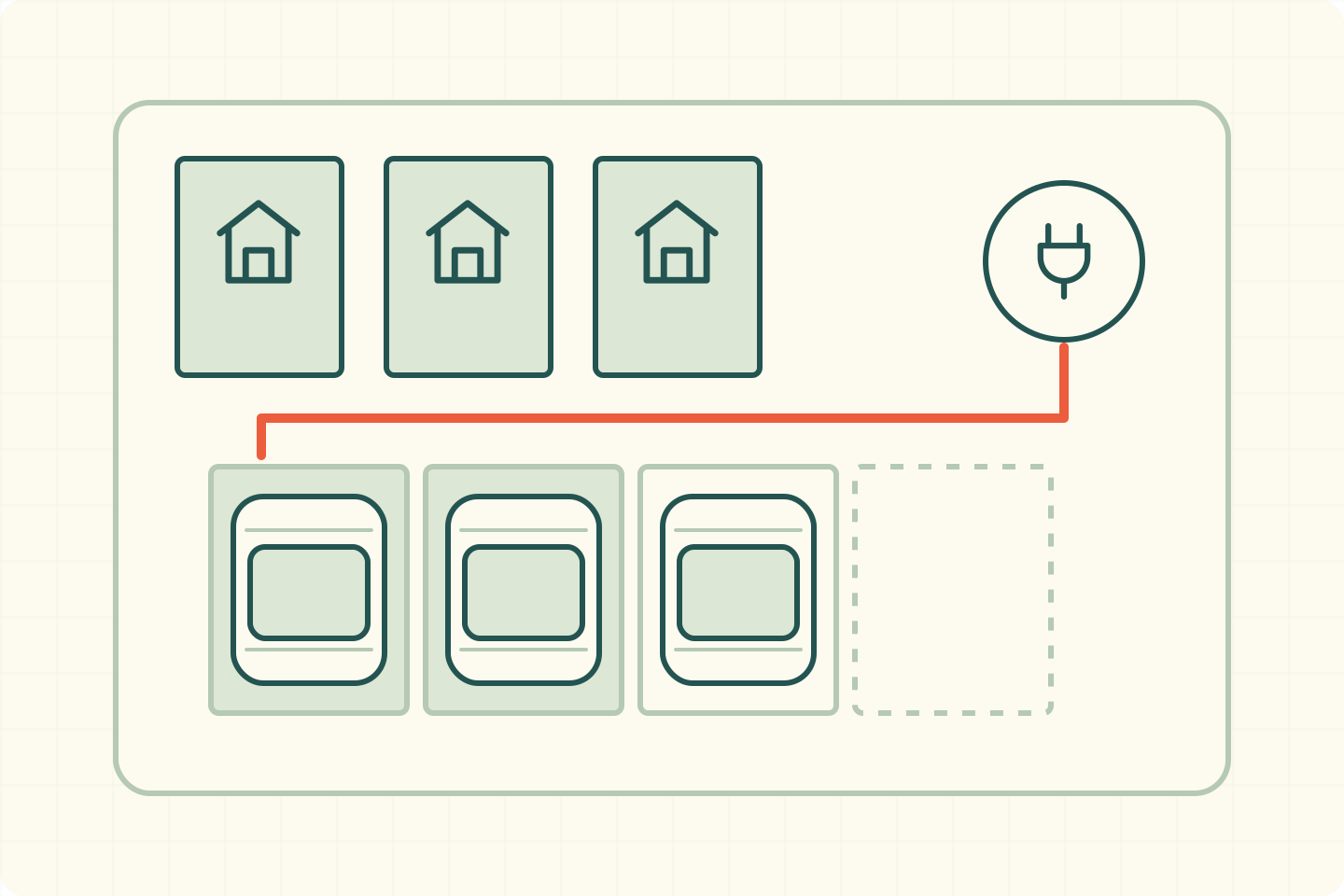
Residents may have assigned bays, different vehicle needs and different expectations of who pays. Electrical installation is only one part of an arrangement the community can live with.
WHAT TO THINK THROUGH
A more useful project brief.
These considerations help shape a site discussion; technical suitability needs assessment.
Conceptual planning graphic
01
Agree how the shared facility will work
Bring the committee, relevant residents and facility team into a conversation about ownership, access and cost allocation. Assigned bays and shared parking create different practical needs. Record how new users will be added and who will approve changes to common infrastructure before choosing a long-term arrangement.
02
Understand the building capacity
Review the existing supply, other building demand and likely charging hours with the responsible electrical professionals. Metering and demand-management options depend on the equipment and electrical arrangement. Confirm what needs assessment or utility input so the committee can distinguish verified capacity from an early planning assumption.
03
Make the first phase easier to extend
Start with the residents and vehicles expected to use the initial installation, while considering pathways and potential future bays. A staged approach can help the society learn from actual demand. Document maintenance ownership, fault reporting and approval of later additions so growth remains understandable to the community.
HOW VASUDHA CAN HELP
Connect the need to the infrastructure.
Discuss site planning, charger installation, supporting electrical works and maintenance needs. Equipment, commissioning responsibilities and service availability are confirmed against your location and scope.
Start with the vehicles that will use the site, how long they normally park and how much charging they need before the next journey. Then review compatibility, the number charging together and the available electrical capacity. AC and DC can suit different patterns; a larger advertised rating is not automatically better. Share the location, vehicle use and parking arrangement so the discussion can begin with the site.
What affects the installation cost?
The cost includes more than the charger. Equipment type and quantity, supply upgrades, cable distance, distribution and protection, mounting or foundations, site preparation and service arrangements affect the scope. Ask for a quotation identifying inclusions, exclusions and work expected from other parties. A location, parking plan and intended use provide the starting point for a meaningful discussion.
Which locations does Vasudha cover?
Vasudha is based in Mumbai, Maharashtra. Share the project location, expected scope and access requirements so availability and execution needs can be discussed. For multiple locations, a site list and proposed sequence create a useful conversation. Coverage is confirmed for the actual project.
PUT THE REQUIREMENT IN CONTEXT
Build an arrangement the committee can explain.
A society may begin with a small group of EV owners while anticipating more requests. The immediate need is to understand the existing parking and supply arrangements, agree how access and costs will work, and identify what an initial installation can support. A clear first-phase brief gives residents a practical decision to consider while leaving future additions open to assessment.
Questions worth answering early
Which residents and vehicles are expected to use the first phase?
Are bays assigned, shared or managed through another arrangement?
How will installation, electricity and maintenance costs be allocated?
Who approves changes and handles requests for additional charging points?
Share the society city, present EV demand, parking arrangement and committee contact. A simple sketch and existing supply information are useful even before a full technical pack is available.
FROM POSSIBILITY TO POWER
Your next EV charging project starts with a conversation.
One site or multiple locations. An early idea or a defined requirement. Tell us what you’re planning.