
INFRASTRUCTURE
The electrical infrastructure behind an EV charging site
Published · Updated 27 October 2026 · Vasudha editorial
A charging site needs an appropriate path from the electricity supply to the vehicle. Supply capacity, distribution, protection, earthing and installation conditions require professional assessment.
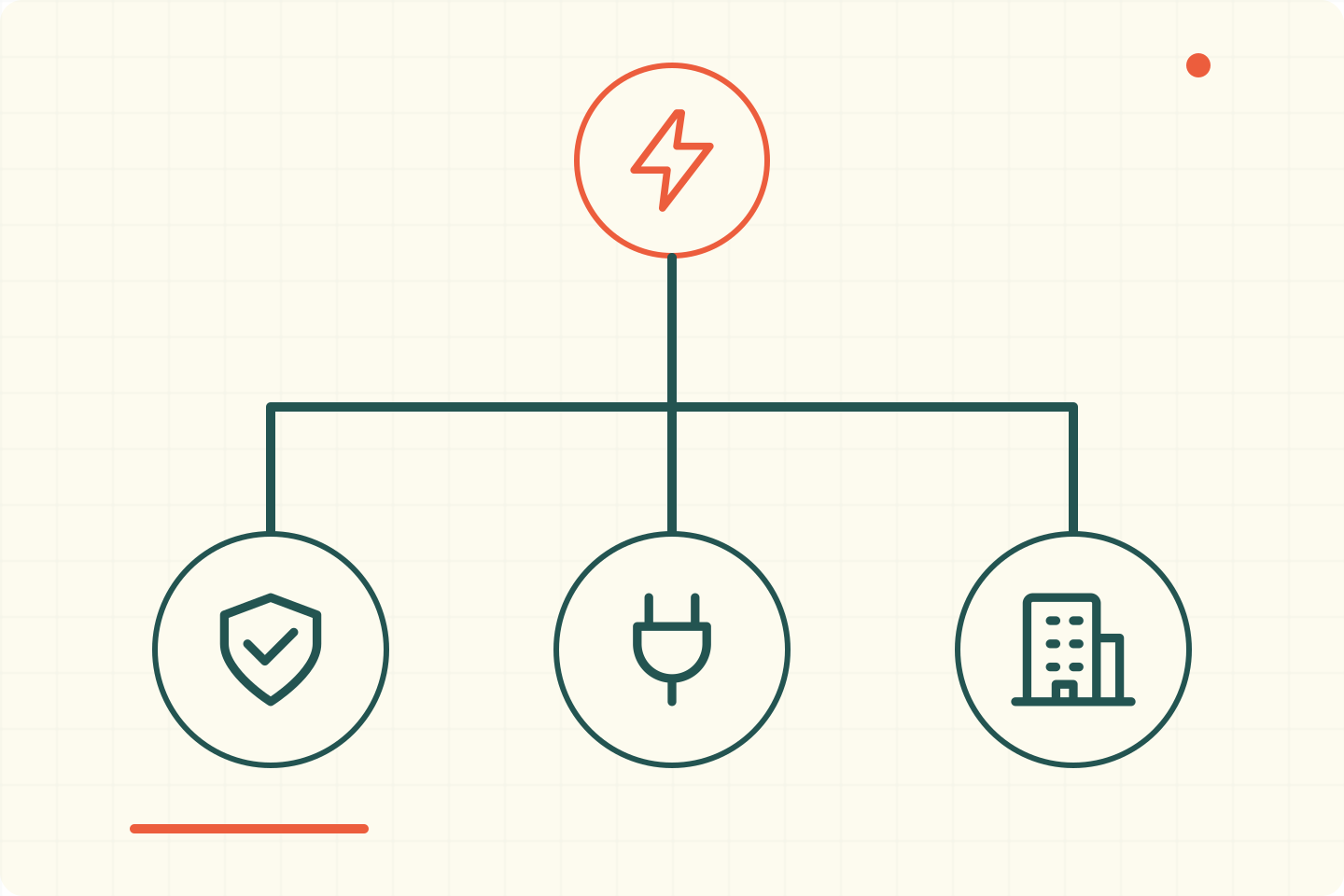
Start at the supply
Identify the existing electricity connection, sanctioned load and other demand at the property. Review the charger specification together with the property’s supply and operational requirements. The distribution utility and responsible technical professionals may need to review connection changes or upstream upgrades.
Map distribution and cable routes
Record the proposed supply point, cable distance, routing constraints and charger position. Long routes, restricted access and existing services can affect the work. Cable sizing and protective equipment are design decisions for qualified professionals, not choices to make from a generic checklist.
Consider the environment
Equipment placement needs to account for the actual site: weather exposure, vehicle impact, drainage, access and service space. Charger and enclosure suitability should be checked against manufacturer documentation. Use site photographs and equipment information to explore the arrangement that best fits your location.
Define testing and handover
Clarify who installs, inspects, tests, commissions and authorises energisation. Agree what records the owner receives and who retains equipment information. Never open a live enclosure or carry out electrical checks to prepare an enquiry; photographs should only be taken from a safe position.
Use the right references
Review current Central Electricity Authority safety requirements and Ministry of Power charging guidance with the responsible professionals. Local utility and project conditions also matter. Use these references in a site-specific design discussion covering the equipment, installation conditions and applicable requirements.
Collect useful records without taking risks
Connection documents, approved drawings and maintenance records can help professionals understand the site. A sketch and photographs taken safely can introduce cable routes and equipment positions. Identify missing records honestly. Do not remove covers, enter restricted areas or carry out measurements yourself simply to complete an enquiry pack.
Treat interfaces as part of the design discussion
A project may involve the property electrical team, utility, civil contractor, OEM and installation partner. Clarify ownership of each design input and what must be ready before the next activity. A scope can identify supply changes, enabling works, installation and commissioning dependencies so responsibilities do not disappear between contractors.
Keep handover information usable
Ask which equipment information, inspection or test records and contacts the owner should receive. Establish who maintains those records and how changes are documented. For later additions, existing information is a better starting point than photographs alone. The design still needs review against the proposed change and applicable requirements.
Bring the questions to your site.
Tell us what you are planning. We can identify a useful starting point for the infrastructure discussion.